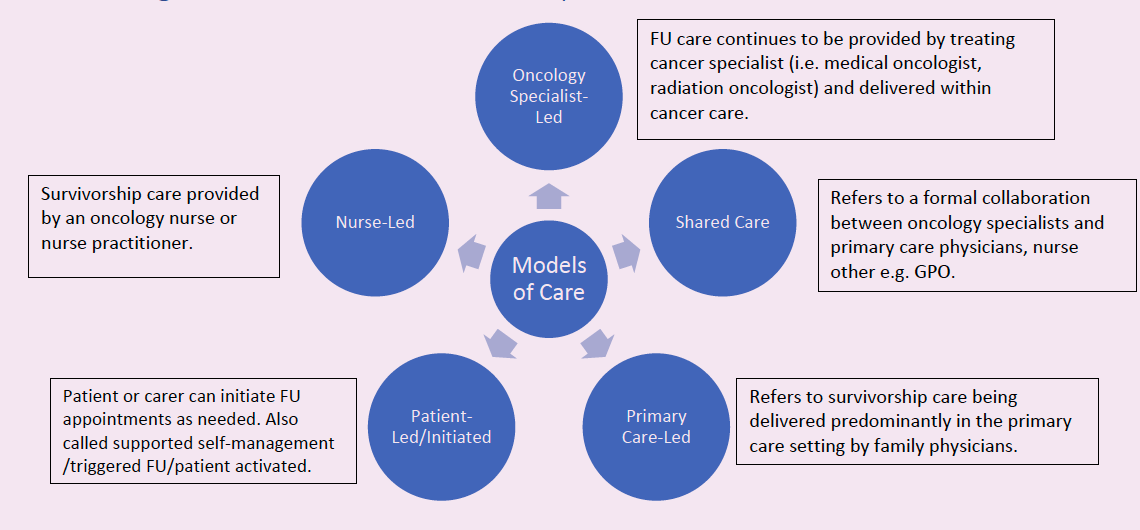
Models of Survivorship Care and Definitions
Models of care refers to the planning and delivery of health services, specifically how care is organized and structured and who delivers the care and any care processes or tools such as survivorship care plans that support the transition to post-treatment survivorship care (47). Survivorship services should address the need for a coordinated and well-organized system and allow for the expressed allocation of responsibilities for different functions and processes of various entities or units, such as hospitals, cancer care programs and organizations, community-based organizations, health and supportive care teams, and survivors (37). Organizational considerations include staffing and staff mix, personnel training, and coordinated communication between health professionals and care sectors, financial and human resources, geographic considerations, social determinants of health, and equitable access.
There are many models of survivorship care including (but not limited to) with the most common being identified as follows: oncology specialist-led care, shared care, primary care-led, nurse-led (may include Registered Nurses or Nurse Practitioners (NP) or Advanced Practice Nurses (not an NP), and patient-led or initiated with supported self-management (33,35,45).
The common models of care and their definitions that were the focus of the updated evidence review for this guideline are shown in Figure 2. Models of Survivorship Care.